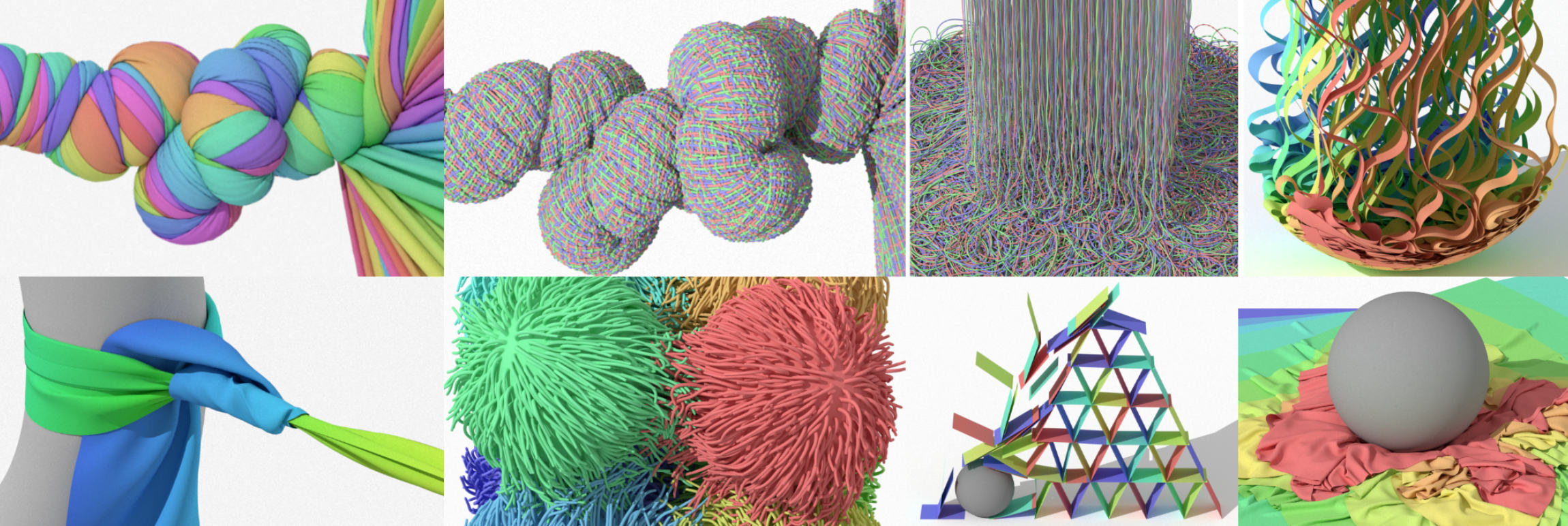
If you’ve ever dealt with cloth that stretches like a rubber band or geometry that happily passes through itself mid-simulation, you know how frustrating physics in 3D can get. A new Blender add-on just dropped that tackles exactly this, and it comes from an unexpected place: ZOZO, Japan’s largest fashion e-commerce company.
The tool is called ZOZO’s Contact Solver. It was built by Ryoichi Ando, a Simulation Engineer at ZOZO, and it’s based on actual academic research published in ACM Transactions on Graphics at SIGGRAPH Asia 2024. The short version of what makes it interesting: it uses a Finite Element Method approach that guarantees cloth and soft bodies never exceed a defined strain limit, typically between 1 and 5%. That means fabric that actually behaves like fabric, not like latex.
The solver handles shells (cloth), solids and rods, all with penetration-free contact resolution. It runs on the GPU in single precision, which keeps things cache-efficient, and it scales up to over 180 million simultaneous contacts for large-scale work. It also has MCP integration, meaning you can use an LLM to help configure simulations, which is a genuinely novel workflow worth experimenting with.
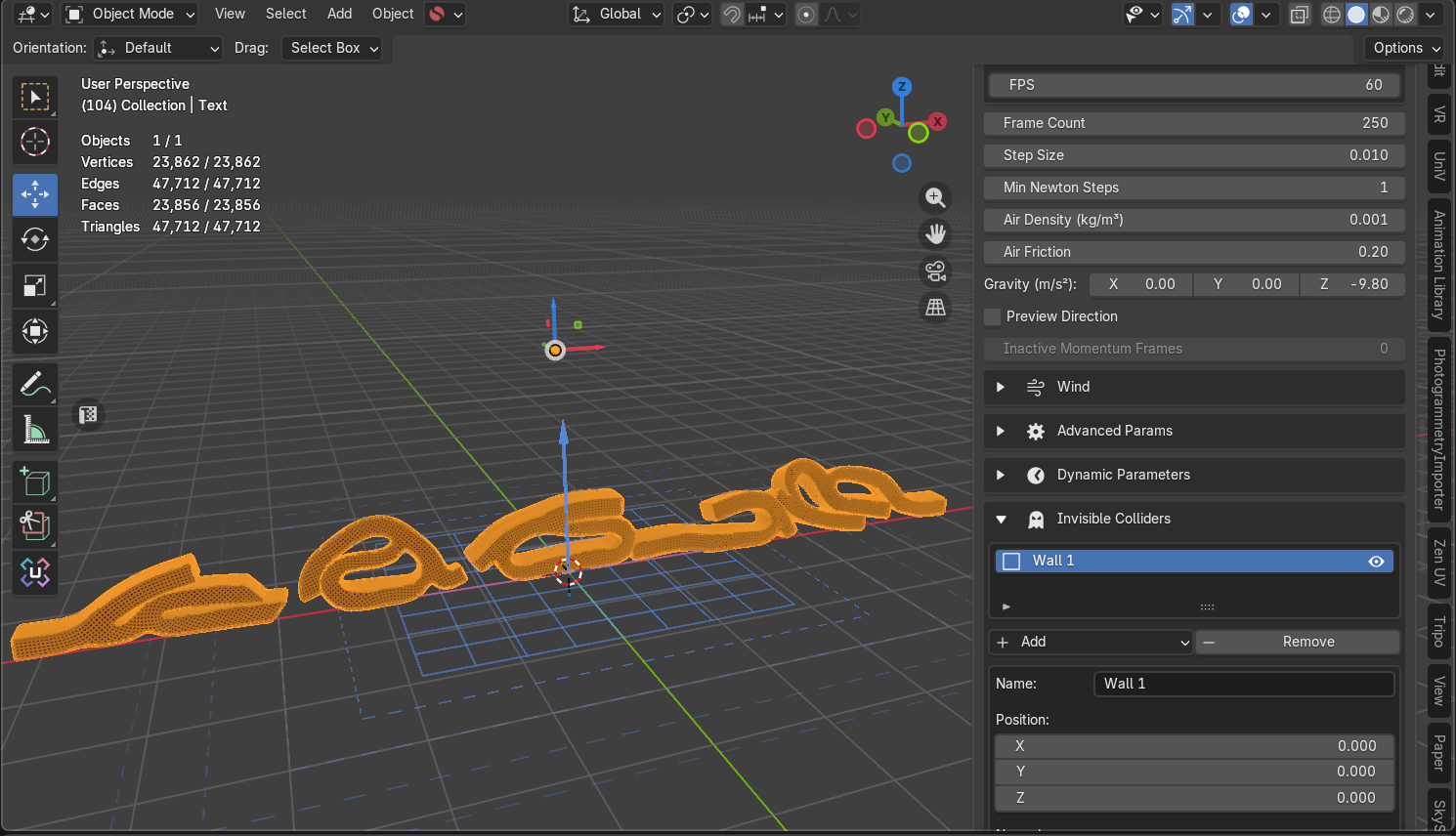
One thing worth saying upfront: this is not a replacement for Blender’s built-in simulation tools. Ando himself is clear about it. Simulations are slow, this is an offline tool, and the UI still requires some manual setup. But the underlying solver is robust, tested with stress runs of every example ten times in a row with randomized scene variations, and the whole stack is released under Apache 2.0 so it’s free for commercial use.
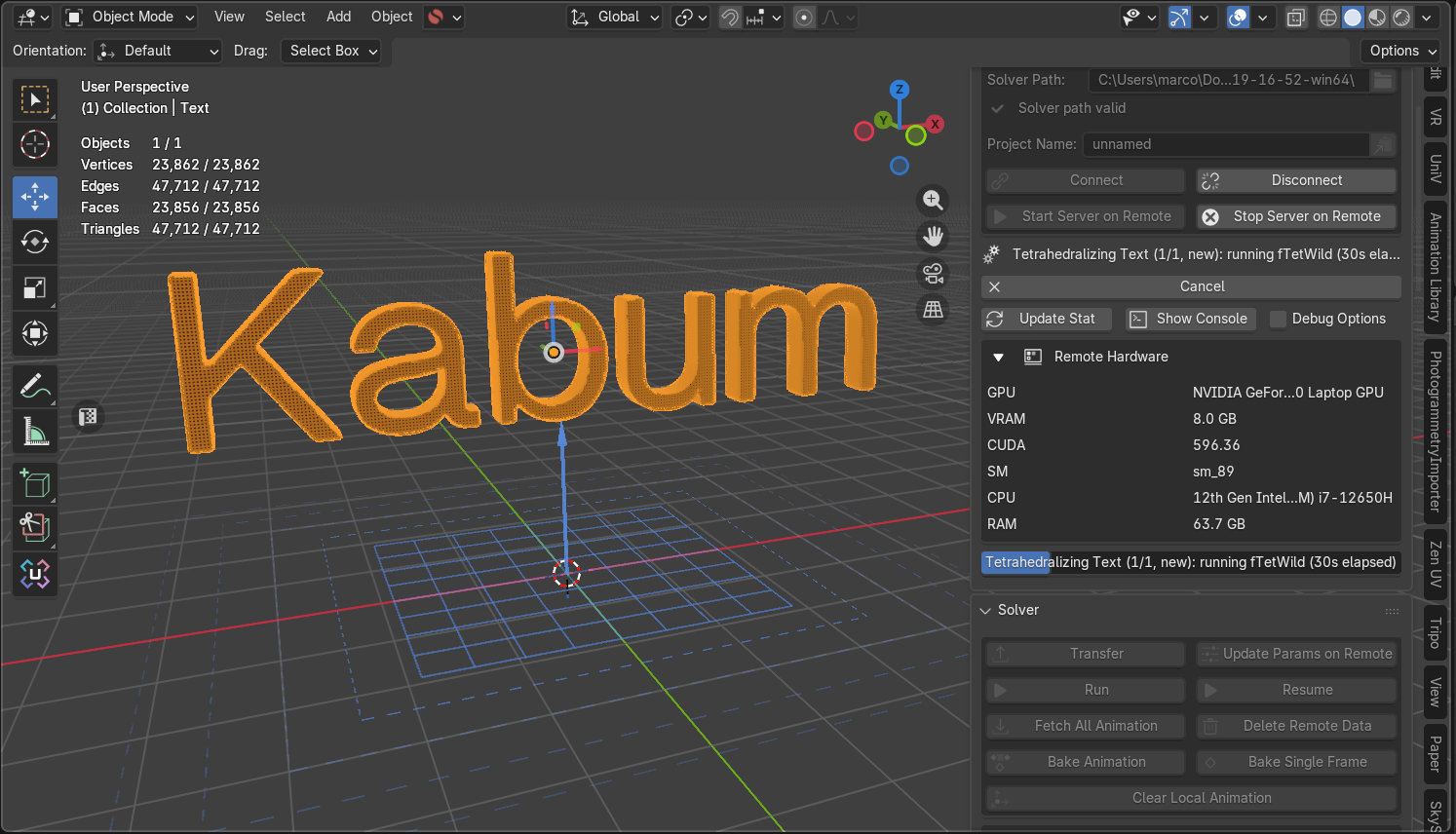
For studios or artists working on garment visualization, product shots or any VFX work where cloth accuracy matters, this is worth exploring. And you don’t need a beefy workstation to try it. The solver can run remotely on cloud GPU instances like vast.ai or AWS for around $0.50 to $1 per hour, with a browser-based JupyterLab interface that makes the whole thing surprisingly approachable.
On Windows there’s a self-contained executable that needs nothing else installed. On Linux a Docker image gets you running in a few minutes.
As a Blender Corporate Bronze Supporter we pay attention to what’s growing in this ecosystem, and seeing research-grade simulation tooling land in Blender as open source is genuinely exciting. The project is still early and rough around some edges, but if the community picks it up there’s clearly room for it to grow.
The full repository with examples, documentation and tutorial videos is on GitHub at github.com/st-tech/ppf-contact-solver.





Recent Comments
No comments